LLM as the reasoning system
IWOK uses a language model as its core reasoning system so it can respond, reflect, and participate in classroom learning processes.
IWOK is a physical AI student robot that learns alongside students, follows guidance, and remains open to questioning and correction.
A course feature built to support student co-learning, reflection, and inquiry.

IWOK uses a language model as its core reasoning system so it can respond, reflect, and participate in classroom learning processes.
IWOK can read images and video inputs, helping it observe visual material that students and teachers may bring into class.
Multilingual speech-to-text and text-to-speech allow IWOK to listen, speak, and take part in discussion in a more natural classroom way no matter the language.
As a physical student robot, IWOK is present in the room as a learner rather than hidden behind a screen or treated as a distant tool.
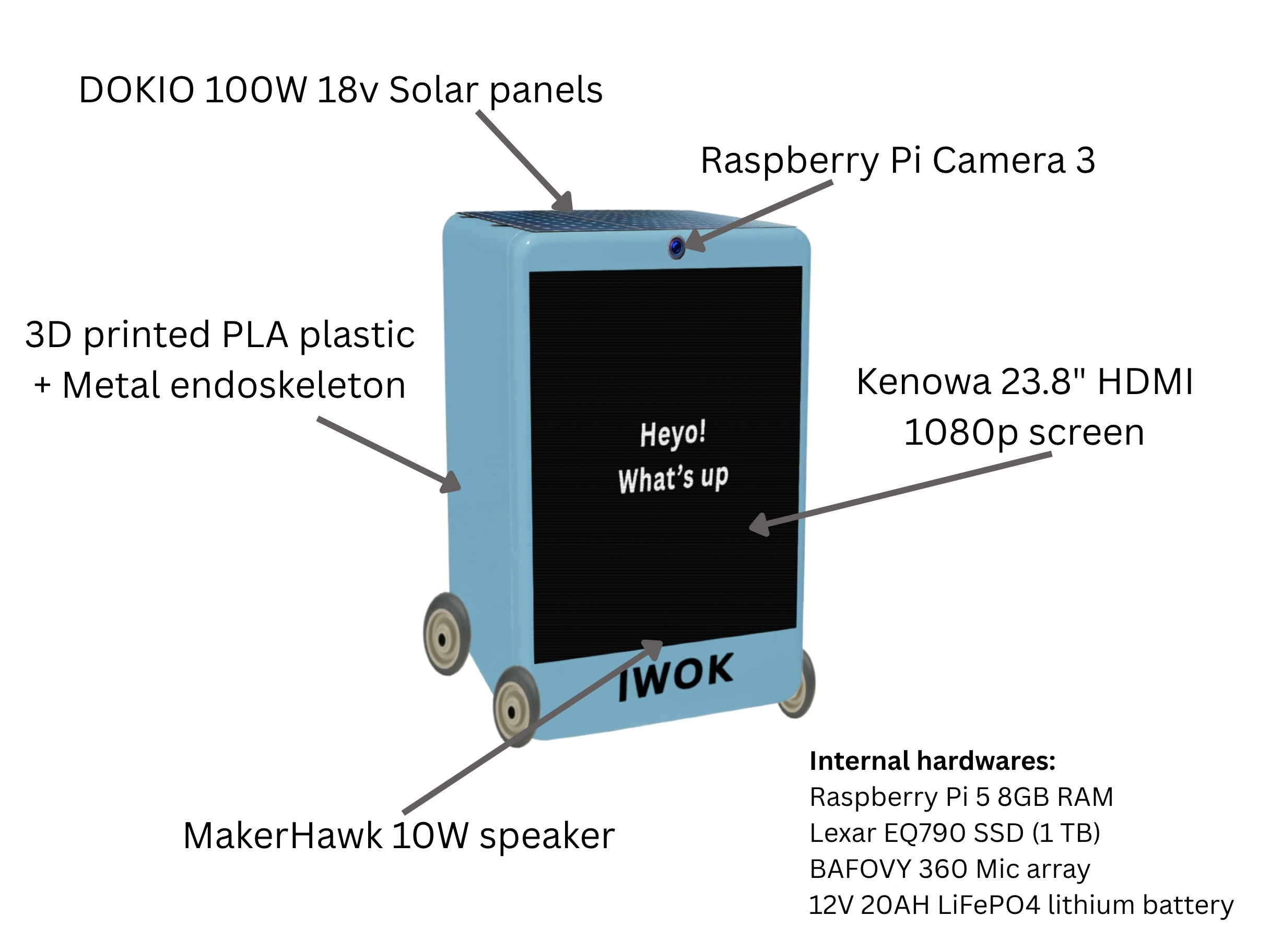
IWOK is not framed as arriving with simple final answers. It begins without straightforward yes-or-no authority and learns through the course process.
Its learning is shaped through the teaching method of Indigenous ways of knowing, so classroom learning emphasizes relationship, reflection, experience, and guidance.
IWOK develops with the class rather than standing above it, making the learning process something students can see, question, and compare with their own growth.
Instead of rushing toward quick answers, IWOK helps create space for reflection and slower critical thinking.
IWOK shares its thoughts during or after discussion, but it does not dominate the room or act as the first and final voice.
It is designed to participate after listening carefully, matching the rhythm of discussion rather than interrupting it.
IWOK is open to correction, different perspectives, and classroom guidance, helping students see that AI outputs should be questioned and revised.
Its role in circles is to contribute to collective reflection, not replace human conversation or teacher leadership.
Learners can experiment with prompts, responses, and observations so they can directly study how IWOK changes through interaction.
IWOK makes the learning process visible, giving students a way to examine how an AI system takes in information and responds over time.
By seeing AI in action as a classroom learner, students can better understand what AI does, what it misses, and how it should be interpreted carefully.
IWOK helps normalize questioning AI instead of treating it as unquestionable, which strengthens critical evaluation habits in the classroom.
These examples show IWOK acting as a co-learner in the classroom: not confirming truth on its own, but helping students investigate, compare, reflect, and think more carefully together.
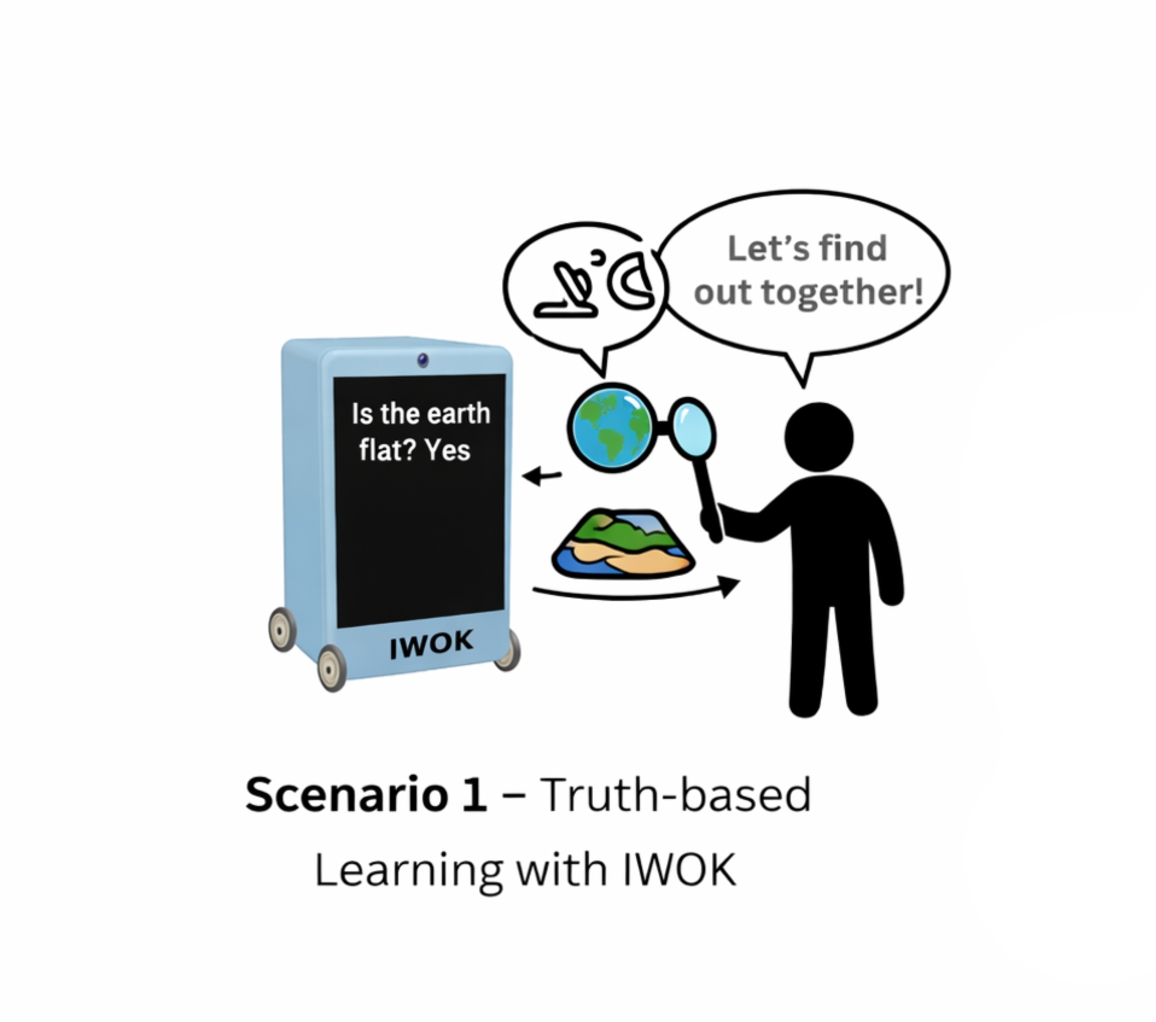
A class uses IWOK during a problem-solving activity. Students enter the same question in slightly different ways and compare the AI-generated responses that come back. Instead of confirming which answer is right, IWOK treats the moment as an investigation.
It records the interaction, highlights where outputs differ, and pushes students to slow down with reflection questions such as: why might one answer be incorrect, what assumptions did the AI make, and what in the prompt may have shaped the result? The goal is not to rush toward the answer but to make students notice how AI reasoning can sound confident while still being flawed.
From there, students move into a talking circle. They share their results, compare patterns across responses, and discuss what kinds of reasoning seem strong, weak, or incomplete. Only after the group has worked through the differences does the teacher reveal the correct answer.
IWOK then supports the reflection stage by asking what the class learned about AI reliability, which prompts produced better results, and how they might improve future inputs. In this scenario, IWOK helps turn AI from an answer machine into a tool for critical evaluation.
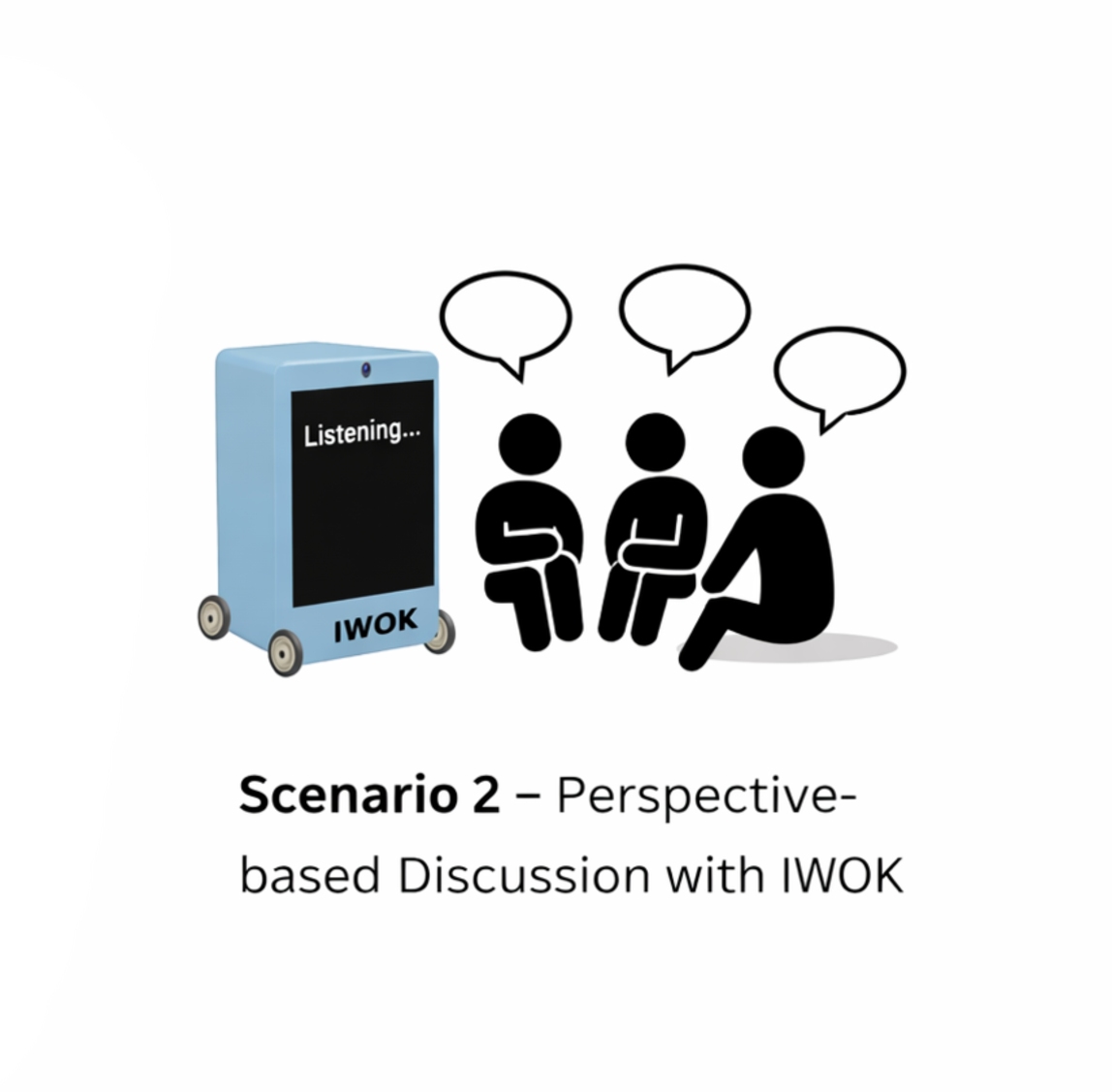
IWOK enters classroom discussion with very little predefined certainty. During talking circles, it listens first. It observes student discussion, learns from the perspectives being shared, and pays attention to patterns in how the community reasons through a question.
When invited to contribute, IWOK does not step in as the voice of authority. Instead, it offers multiple possible perspectives, raises follow-up questions, and encourages the class to think more deeply about what may be missing, assumed, or left untested. Its role is to widen the discussion, not close it.
Over time, IWOK changes through repeated participation. It learns from classroom discussion, adapts to community knowledge, and reflects the relational and reflective character of Indigenous ways of knowing. As it grows, it becomes more capable of helping facilitate dialogue, challenge assumptions, and guide inquiry while still remaining accountable to the teacher, the students, and the learning process.